
Search Florida Residents Directory
Florida residents directory records are public and open to all. Anyone can search for them. The state has more than 22 million people across 67 counties, and each county keeps its own records through the clerk of court, property appraiser, and supervisor of elections. Voter data, property info, professional license details, and court records are all part of the Florida residents directory. Many of these are free to search online. Some cost a small fee. This guide shows the main ways to look up Florida residents and points you to the right resources for your search across the state.
Florida Residents Directory Quick Facts
How to Find Florida Residents
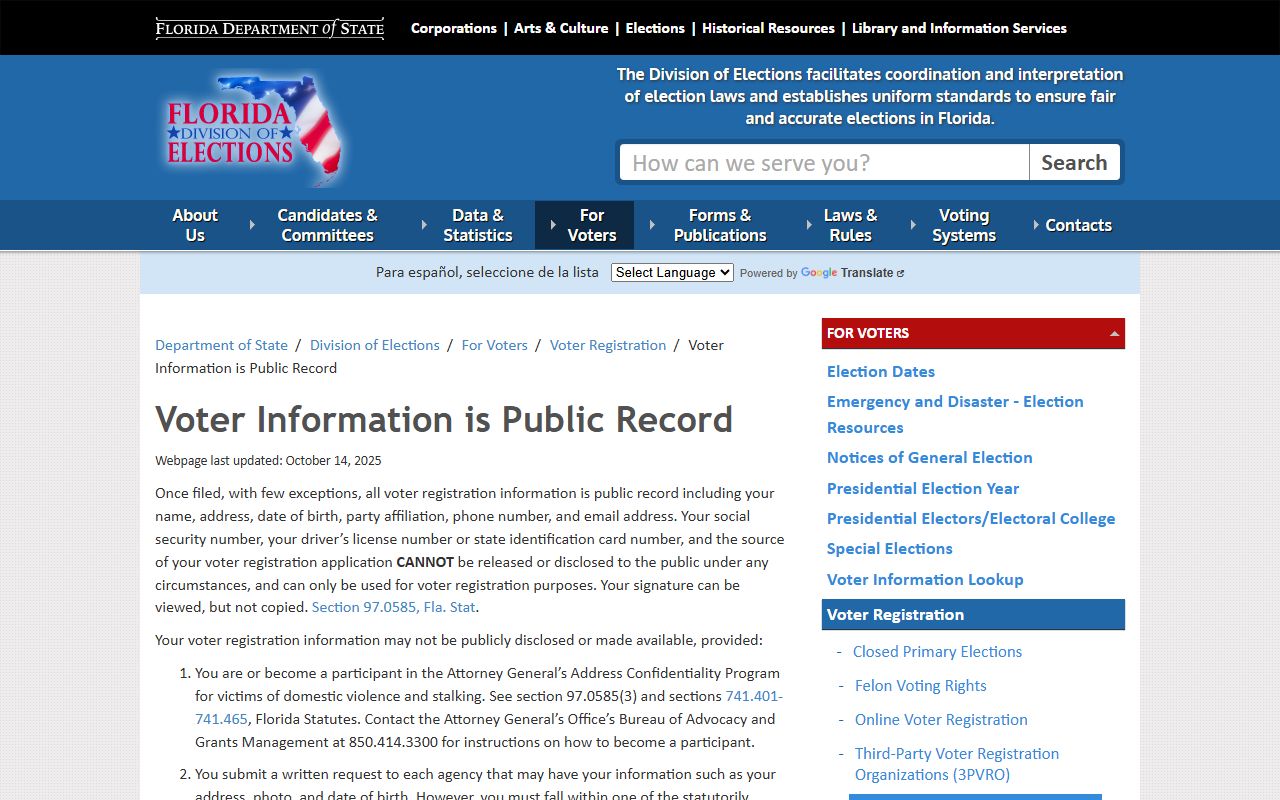
Florida has several public databases that let you search for residents by name, address, or other details. The most used is the voter registration system. Under Florida law, voter registration info is public record and may be given to any person who asks. The data has each voter's name, home address, date of birth, and party affiliation. You can get voter lists from any county Supervisor of Elections or from the Florida Division of Elections in Tallahassee. Social Security numbers and driver's license numbers are not part of the public voter file. This makes voter records one of the best ways to find a current address for a Florida resident.
The Florida Division of Elections portal below shows what voter data counts as public record across the state.
High-risk workers such as judges and law enforcement can ask to have their info exempted from the public file in Florida.
Property records give you another way to search for Florida residents. Every county has a property appraiser who tracks each parcel of land and its owner. You can search by owner name or by street address. The records show who owns a property, their mailing address, assessed value, and exemption status. Most county property appraiser sites in Florida let you search at no cost. The Miami-Dade County Property Appraiser lets you search by address, name, or folio number. The Broward County Property Appraiser runs a similar tool with an Owner Alert service that tells you about changes to property ownership. If a Florida resident has a Homestead exemption on file, that is almost always their main home address. Property boundary maps are used for tax assessment and are not a legal survey.
Voter registration data can also be used for jury selection in Florida.
Florida Residents Records Law
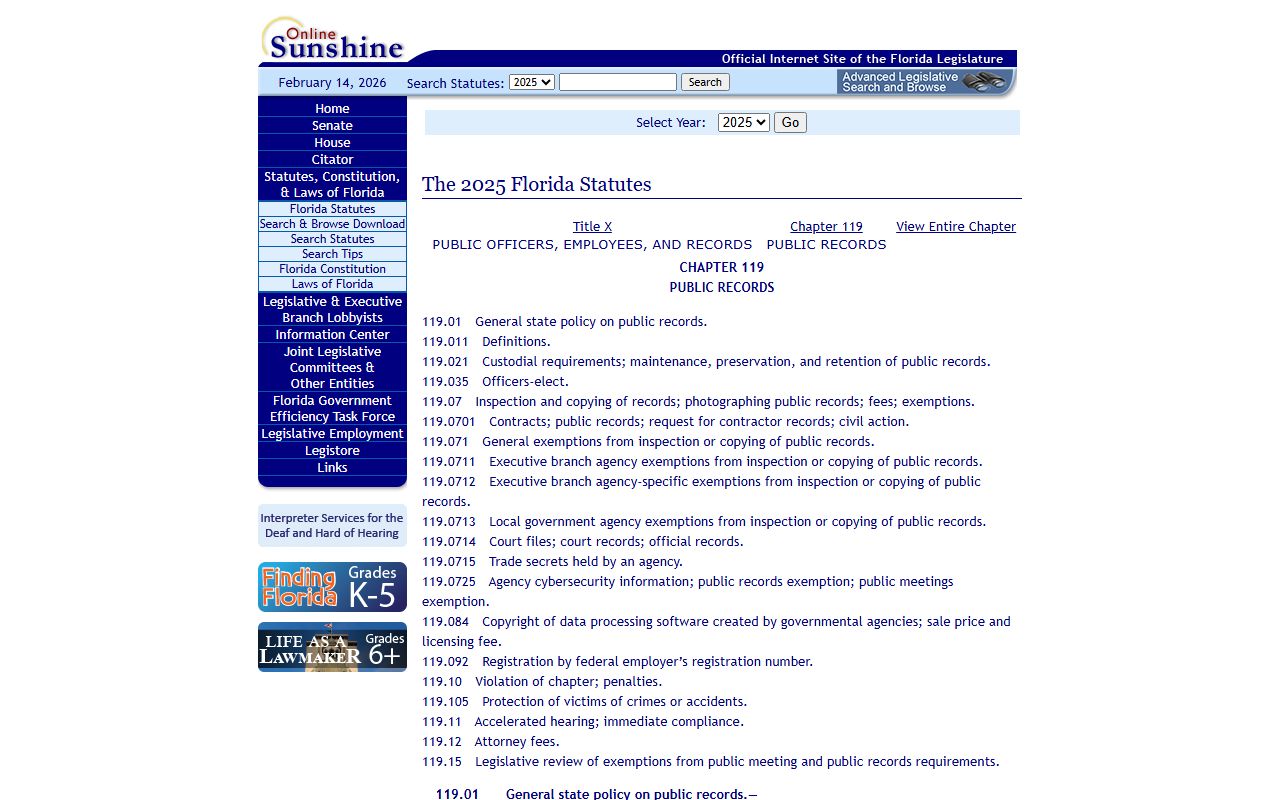
Florida has one of the broadest public records laws in the country. Chapter 119 of the Florida Statutes says that all state, county, and municipal records are open for personal inspection and copying by any person. Section 119.011(12) defines public records as all documents, papers, letters, maps, books, tapes, photographs, films, sound recordings, data processing software, or other material made or received in connection with official business by any agency. Section 119.07(1) gives every person the right to inspect and copy these records. You do not need to give your name or state a reason. This means that records about Florida residents held by any government office are open to the public without restriction.
The full text of Florida Statutes Chapter 119 details the rules for public records access across every agency in the state.
Agencies must provide records within a reasonable time under the law.
Some information about Florida residents is exempt from public access. Social Security numbers, driver's license numbers, and Florida ID numbers are always kept out of public files. Active criminal investigation records may be held back until a case closes. Home addresses and photos of current and former law enforcement are also exempt in Florida. Agencies can charge up to 15 cents per one-sided page copy. A two-sided copy adds no more than 5 cents extra. If a request takes more than 30 minutes of staff time, the agency can charge for labor at the rate of the lowest paid person who can do the work. Fees must be paid before records go out.
Note: The Florida Sunshine Law is the common name for these public records and open meetings rules that apply to every level of government in the state.
Florida Court and License Records
The Comprehensive Case Information System is a single point of search for court records from all 67 Florida counties. CCIS is run by the Florida Clerks of Court and gives you access to case summaries, dockets, and sometimes document images. The public, attorneys, and law enforcement can all use it. You need to register for advanced search tools, but basic searches are free. If you want to check whether a Florida resident has any court cases on file, CCIS is the fastest place to start. The system pulls data from every clerk of court in the state so you can search by name for civil, criminal, family, and probate cases.
The Florida CCIS portal is a statewide search tool that covers court records from all 67 county clerks.
Not all document images are available for every case type because of privacy rules set by Florida law.
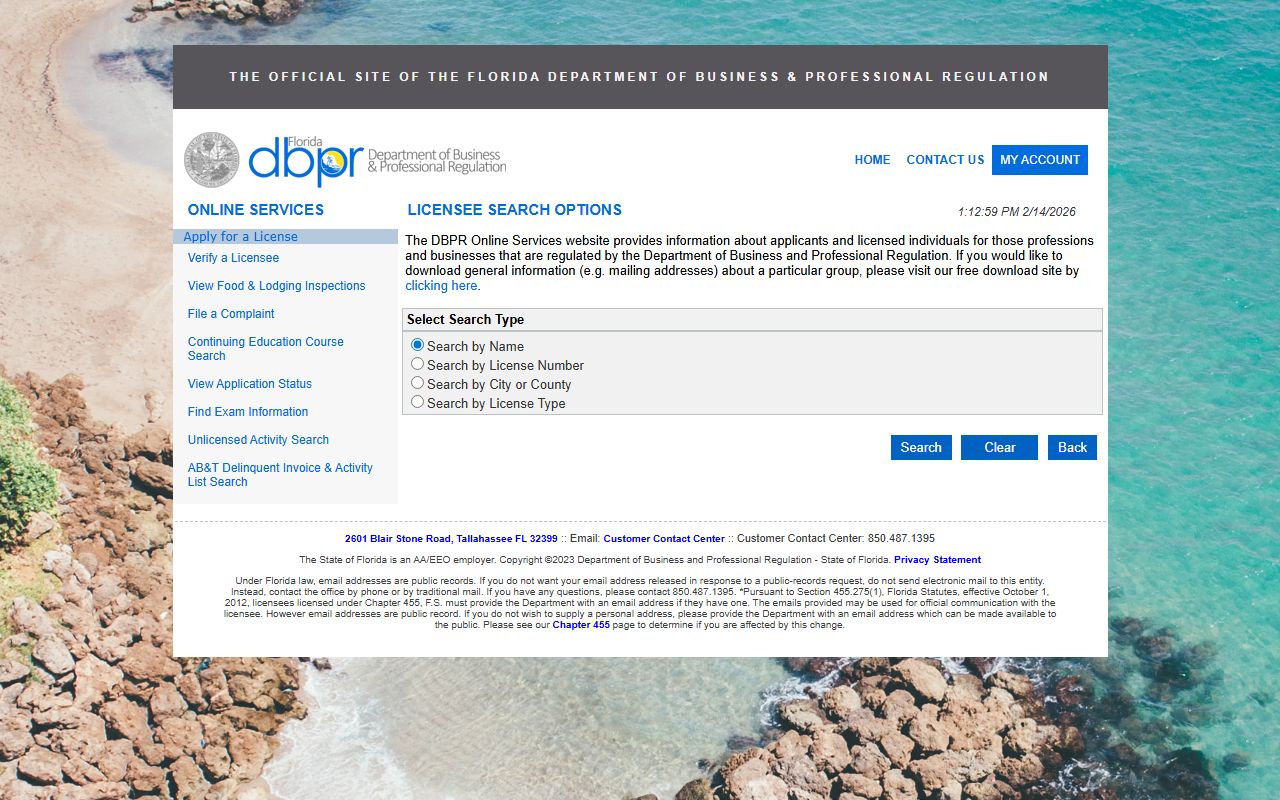
The Florida Department of Business and Professional Regulation manages licenses for over one million professionals and businesses in the state. You can search for any licensed Florida resident by name, license number, city, or county. Results show the person's name, license status, address of record, expiration date, and any disciplinary history. The DBPR database covers fields like real estate, construction, cosmetology, and dozens of other trades in Florida. A downloadable files section also has bulk license data for research use. This is a useful way to verify where a Florida resident works or whether they hold a valid professional license.
The DBPR license search page lets you check the status of any licensed professional or business across all of Florida.
Always check that a license status says Active before hiring any contractor or service provider in Florida.
Florida Residents Safety Search
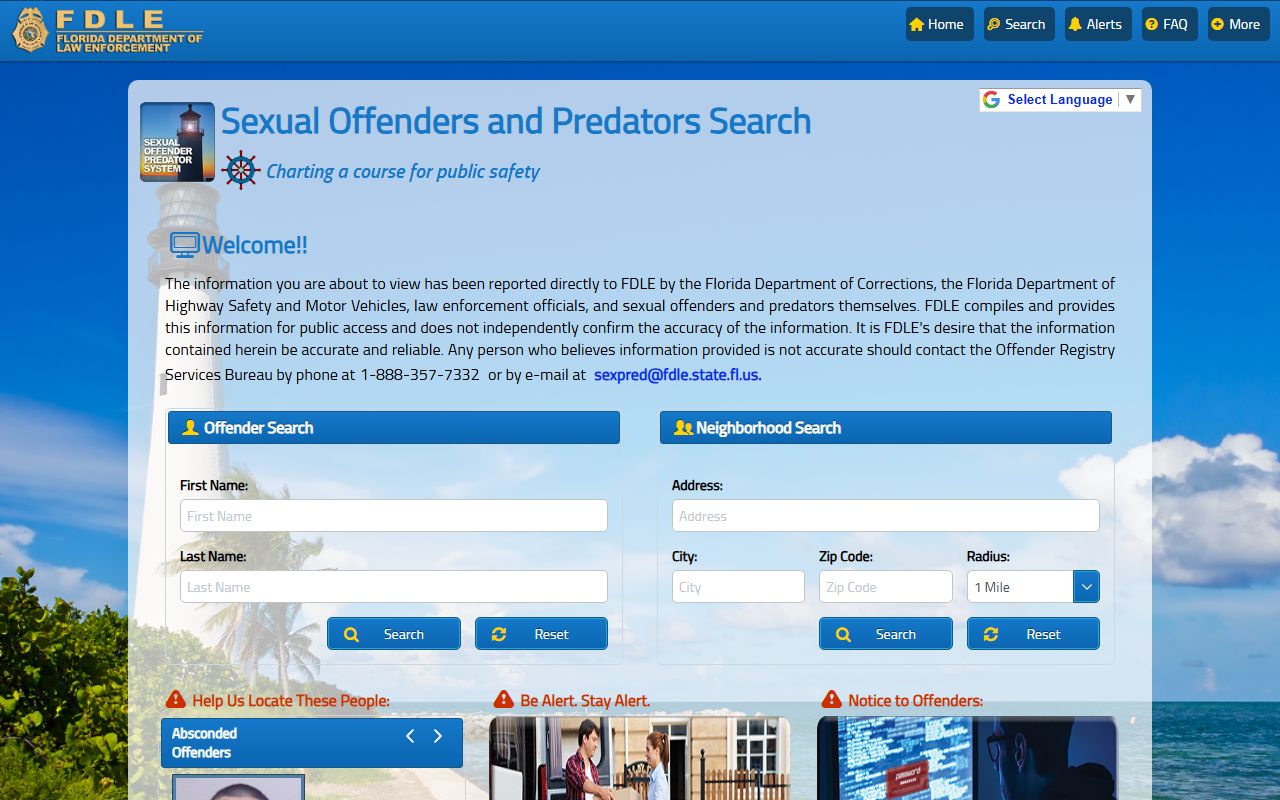
The Florida Department of Law Enforcement runs a public database of registered sexual offenders and predators. You can search by name, address, or zip code to see if anyone near you is on the registry. The database shows photos, physical descriptions, offenses, and current addresses for each person listed. It gets updated daily as offenders check in with local law enforcement across Florida. A neighborhood search tool lets you see all registered offenders within a set distance of any Florida address. You can also sign up for email alerts when a person's status changes in your area of the state.
The FDLE offender search portal covers all registered offenders statewide and can be searched by any Florida resident or visitor.
It is a crime under Florida law to use this data to harass or threaten any person on the registry.
Each county clerk of court in Florida also keeps official records like deeds, mortgages, liens, and marriage licenses. These can help confirm where a Florida resident lives and what property they own. Many county clerks let you search for free on their websites. For records that are not online, you can visit a clerk's office in person or send in a request by mail or phone. Some county clerks in Florida charge a small fee for copies of documents while others provide basic search results at no cost.
Search Florida Residents by County
Each county in Florida has its own clerk of court, property appraiser, and supervisor of elections who keep public records on local residents. Pick a county below to find the resources for that area of the state.
Florida Residents in Major Cities
Florida has dozens of cities with more than 25,000 residents. People in these cities file records through their county offices but may also use local city portals for public records requests. Pick a city below to find resources for that area.